The short answer
A drainage problem can involve a restricted hose, an obstruction, the pump or the household waste connection. It can also prevent the final spin. Do not force the door or unscrew a filter with a full or hot drum.
Symptoms and possible causes
The useful starting point is when the water stops leaving: immediately, partway through draining, or only on some cycles. Note what you observed before stopping the machine. Do not run another wash just to collect evidence.
Water stays in the drum after the cycle stops
A restriction or pump-related fault is possible. A stopped cycle alone does not prove which component is responsible.
Useful next detail: Was there a drainage code, and was the water level falling at all?
You hear a hum but little water leaves
The sound can accompany a restricted drain path or a pump problem. Hearing the pump area does not establish that water is being pumped effectively.
Useful next detail: Was the noise new, and did it stop after a short period?
Water leaves slowly and the cycle times out
A partial restriction or installation issue can affect the flow. The model and waste arrangement need checking before changing hose heights or components.
Useful next detail: Has the machine recently been moved or connected to different plumbing?
The sink or standpipe backs up
The household waste system may be restricting the discharge. An overflowing waste connection can require a plumber rather than an appliance part.
Useful next detail: Is water coming from the waste connection instead of the machine?
Draining stops and the door stays locked
The lock may remain engaged while water is retained or the appliance has not reached a safe release condition. Forcing it can cause damage and a spill.
Useful next detail: Is the lock indicator on, and is the drum still visibly full?
These are possible explanations, not a confirmed diagnosis. The appliance model, installation and inspection findings determine the next step.
Safe checks you can make first
Only attempt normal owner care when the appliance and access are safe. Stop for leakage, electrical damage, burning smells or violent movement. Your exact model manual takes priority.
Stop adding water
Do not start another wash. If the machine is leaking, stop use and close the supply tap only when safely accessible without moving the appliance.
Keep clear of electrical hazards
Do not touch wet plugs, sockets or switches, and do not step into water to reach them. Arrange safe isolation or qualified assistance if the supply area is wet.
Observe accessible plumbing
From a safe position, look for an obvious crushed section of visible drain hose or a backed-up waste connection. Do not disconnect hoses or pull out a heavy machine.
Consult the exact model instructions
A normal drain command may be appropriate only if the manual allows it and there is no leak, overheating or electrical hazard. Stop if it fails; repeated attempts are not a repair.
Leave a full filter housing closed
Some models have owner-accessible drain arrangements; others differ. Follow the exact manual only when safe, cool and correctly isolated. If unsure, leave controlled draining to the technician.
Still unsure what the symptoms mean?
Tell us what you noticed, the brand and your suburb. We can help you understand the next step or arrange a technician assessment.
How a technician checks this fault
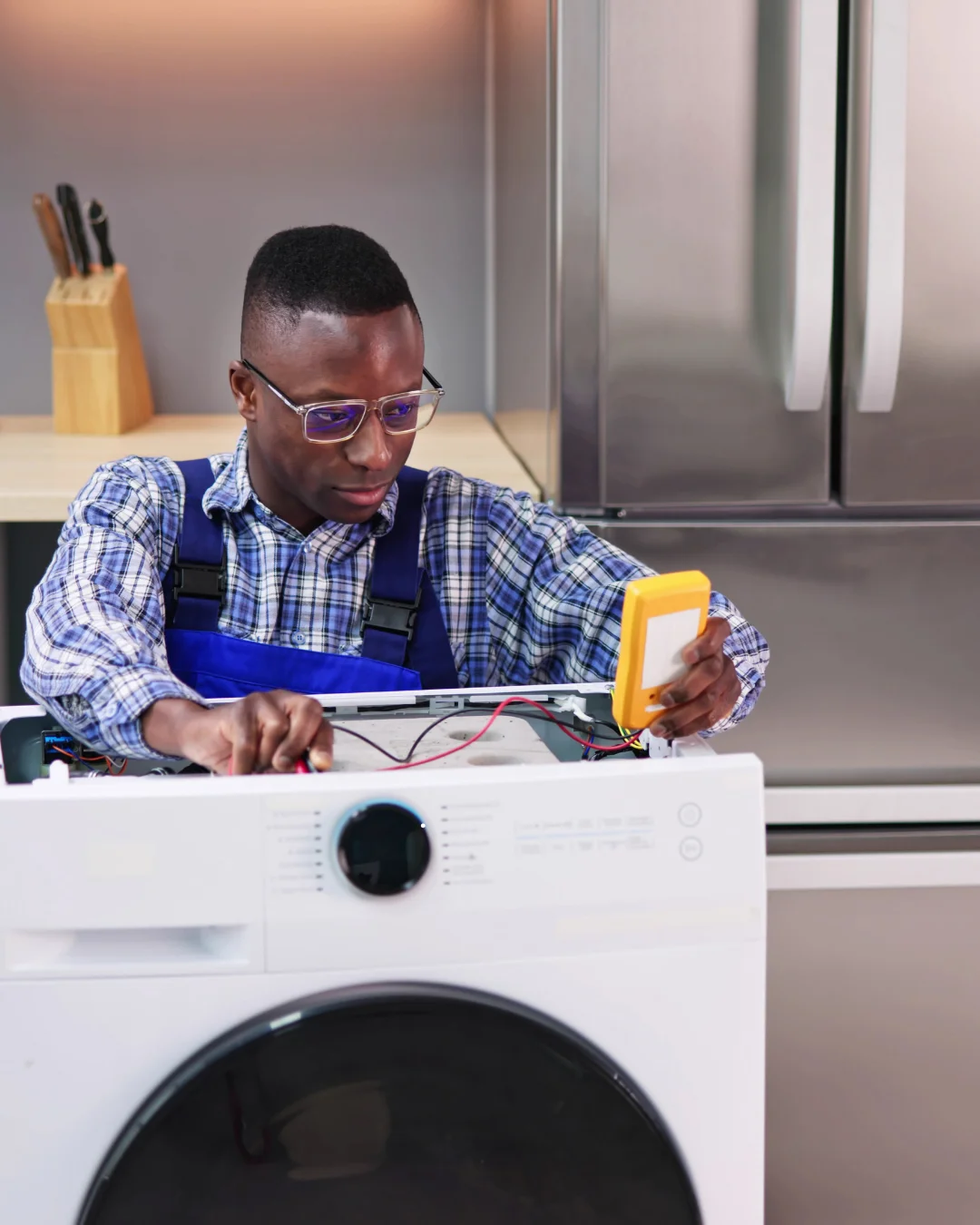
We establish whether the restriction is in the appliance’s drain path or the external waste connection. The technician may assess the pump, accessible filtration, hose routing and the machine’s drain sequence. An error message is a starting clue, not an instruction to replace the pump.
If household plumbing is the cause, we explain that finding before you approve unnecessary appliance work.
When to stop checks and ask for help
- Water remains after an appropriate normal drain command.
- A drainage code keeps returning or the pump sounds abnormal.
- The door is locked with water inside and safe owner draining is unclear.
- There is leakage, a wet supply area or a burning smell: stop use.
How to help prevent it happening again
Empty pockets before every load
Coins, clips and small items can enter parts of the drain system.
Follow model-specific filter care
Use the interval and safe procedure in your manual. A filter is not safe to open simply because it is visible.
Protect the hose route
Keep storage items from crushing accessible hoses. Ask an installer to correct a poor route.
Keep the waste connection clear
Report sink or standpipe backups early. Do not pour drain chemicals into the washer.
Use suitable detergent
Measure the recommended amount for the load and product. Avoid adding more detergent to a stalled cycle.
Brands, models and error codes
Samsung lists 5C or 5E as drainage-related on relevant models. LG commonly identifies an outlet problem with OE on supported front-loaders. Codes vary by model, and the similar-looking letters OE and digits 0E are easily confused. Send a clear display photo taken safely.
This guidance applies to symptoms found across Samsung, LG, Defy, Bosch, Hisense, Whirlpool and other washing machines. Front-loader, top-loader and washer-dryer arrangements differ. Use the full model number and its manual before interpreting a code or choosing a part.
Frequently asked questions
Can a blocked drain stop the spin cycle?
Yes. A machine may withhold spin when water remains. Diagnose the drainage problem before assuming the drive motor has failed.
Should I open the filter to release the water?
Not with a full or hot drum. Water can escape quickly. Use only the safe procedure in your exact manual, or ask for an assessment.
Why is my washing machine door still locked?
Retained water or another unsafe release condition can keep it locked. Do not pull harder or use a generic emergency-release trick.
Does a humming pump always need replacement?
No. The drainage route may be restricted, or there may be a pump fault. Inspection is needed to tell them apart.
Is this a plumber’s job or a washing machine repair?
An overflowing sink or standpipe may indicate a household waste blockage. Tell us where water appears so the right next step can be arranged.
Why should I avoid repeatedly restarting the wash?
Another wash adds more water without resolving the drainage problem. Stop and use only the safe normal procedure in the model manual, or arrange controlled assessment.
Can an incorrectly installed drain hose cause trouble?
Yes. Routing, restrictions and the waste arrangement can affect draining. Required installation dimensions vary by model; avoid changing them using a generic height recommendation.
Can the same symptom have more than one cause?
Yes. The programme, installation, model and inspection findings all matter. Use these checks to describe the problem, rather than ordering a part from the symptom alone.
Manuals and manufacturer guidance
Use your exact model’s manual. The resources below support the general guidance; they do not confirm the fault on your appliance. Sources checked on 24 November 2026.
- Bosch South Africa: washing machine not draining
- Samsung South Africa: emergency draining precautions
- LG South Africa: front-loader error messages
- Samsung South Africa: washing machine information codes
Have a question about this guide? Contact Meysen Repairs with the page topic and your model.